Augustine and jazz
The first time I heard jazz was in the showers Biguá, when he was just six years. In those days Biguá showers were new ground, unconsciously without fixed ideas about psychoanalysis or anything resembling it, I felt that as a place filled
intensities, where he lived a primitive type of threat, like a cave that had more of Cthulu than Altamira. That was a wild place, where I seemed an anthropologist survivor of a plane crash or a shipwreck, while all children were developing an Aboriginal tranquility not ceased to amaze. The nudity was something that always bothered me from an early age, and seeing all those naked children, his arms loose, no towels, pissing against the chute by the change of thermal generating the steamy shower in their bodies, chasing, throwing shampoo, with her bare feet on the grooved surface of the ground, about to skid, ready to encarnársele a nail, a point
burns from hot water left open like a geyser spent, I felt something limited between fear and disgust. And there were the old, Jewish children whose penis did not understand, officials check as a janitor at an underground prison that we all have a shower in due time. Something like a benevolent torturer, just did not know to put words. The only thing that I thought were some pictures of Saltoncito , a frog that got him in jail, some toads Drawn in charcoal fat waving your keychain shaped medieval ring with particular malice. Saltoncito What is striking was that, beyond history, the portrait was very partially anthropomorphized animal. It was a toad erect. Nothing more. Erect a toad clothes, but his face was indeed that: a frog, toad two black eyes, a mouth of a toad, toad skin, tongue, ready to go as any toad about to catch a fly. It almost seemed that frogs were dissected and dresses, with that strange feeling of life adorning the death (or death decorating life), that mourning jewelry of photos of child death rituals in Mexico. So I watched the
officials: frogs navy blue dresses, with Mario, an uppercase Raul on the heart. I managed to shower with bath short, usually just putting your head under chorro.Pero terror does not end there, steep, wet and crowded was the staircase leading to the pools. That happened all, kids who are beaten, they were given lashes with a towel, a child who once stopped and opened as a network media attached a piece of skin from the ankle. The children were beaten against the wall as mothers in the diving section of children in American fairs and at the time the teacher appeared and gave the order, they all rushed towards Biguá afuera.Era very strange. In my school was a hyperactive child who liked playing tag-hidden, read, make up stories, he collected Debris and had no problem making friends. In Biguá from entering the locker room, I never felt comfortable. But it was a discomfort that came from a fear of others, but a fear of myself. Cagarlos was about to death, and did not know why. It was in the Biguá where you remove my first and only one tooth piñazo a person (tooth-and-milk, I'm not explaining why this post is going to look to the popular song Sabalero). It was in the Biguá Blood also where I spotted a box to give you a pineapple on the nose of a child two years older than my father said was a bichicome (those six years was the time where my father lectured me that I must stick only and only if hit me first.) It was also in the Biguá in my seventeen years where humbled to beat a guy in the middle of a stupid fight basketball (two years later I learned of his death an accident just designed by Dario Argento, but later found that I had been had been his brother). Already in the surface, more chlorine would have on the environment, the pool was based on the same disgust and fear of showers. It was almost like what happened in the showers was a stream that flowed into the same river. In fact, I never liked to swim in the pool. Even now. It's something that reproaches me a lot of people, but even as life member of that club, I never drew me into this small lake to make a chlorine pools. When he opened his eyes did crawl under the water and thought my shadow on the bottom was a small shark that mimics my every move. I knew this was absurd, but still persisted that notion. In fact, I'd lie if I said no remains of the original fear every time I swim in a pool alone (especially large ones). Indeed, one of the few things I like to do (well, one of the few that was really good) was nailed to dive in and touch the bottom of the pool. Below could be a long time and skills between friends was the first to find keys, stones, or bracelets cast by ourselves. I believe that like came on my own confrontation with terror, to discover that basically there was nothing more than my shadow.
There is also a recurring image that somehow has been repeated in several meetings with my psychologist. The rest of my fellow cube and I heard the comments and instructions from the teacher. After listening, all going running to grab our blue pleats, a matted above the other like many stories of a wedding cake to collapse. I remember there got a table and find a mosquito crushed between two of them. Mosquito image I created a strange sort of arcade is now choked up in my throat. What was, what produced the image of the mosquito? But it was in the catacombs of the steamy shower where I realized for the first time jazz. My father would accompany Biguá solarium. The solarium was a completely different world
, and the idea of \u200b\u200bgoing there with my father, I'd probably find there with my cousins, but now I remember, I was hugely enjoyable. It was while I bathing I saw a deodorant that left his necessaire. It was a white cap, small, with rounded edges. In the front was written Jazz with black lettering. The J was a kind of treble clef. The two mushrooms were suggestive, like two ducks facing left, more dynamic than the lyrics that escape from the mouths of the characters from cartoons while they sleep. The roll-on deodorant odor was something different from what would have smelled before. It smelled fresh as the sea but not the essence putrid dead fish. It smelled something like "The Beach" (for which see Seinfeld, the idea that Calvin Klein perfume steals Kramer). On the back he said were written a lot of things that did not understand. "Pour Homme" stuff. All I could understand all that was a "Made in France", which was like the Made in China dolls everywhere in all I knew, by what was supposed to be done in another country, possibly in France. My father confirmed it, and maybe that experience was also the first time I met France. The country already knew, but it was the first time, like reading a bottle with a message inside, I knew something that mattered in that country. Deodorant because that was like a talisman, which allowed for the first time support a structure that seemed to swallow everything. It was like a capsule, a white lantern lit inside the cave. Many think that everything that I say is a complete ramble-and at some point
possibly be right, but who knows why that piece of plastic was something inexplicably crucial in my life. I did almost ipso facto fan of France, a France
not yet had his Oliveiras and Magas walking through Paris, to Deleuze Lacans Foucalts and teaching at universities and in the street, their Debords planning to kidnap Chaplin to Brels showing how far the limits of what is possible in a performance, steep Montmartre, the mobsters involved in especially in Rififi, allowing Zidane to shame a whole picture of Brazilians, to Godards Sebergs filming, asking them to do things that other day walking gusta.El writing this and rereading the incredible shooting diary written by Werner Herzog Fitzcarraldo (a reading material, I dare say, is better than the film itself), I was surprised to find among my story and a story of an unusual childhood of director isomorphism: "I remember having experienced a shiver boy in Sachrang similar when l found in creek near the waterfall a frayed piece of bright blue plastic reached floating and was trapped between the branches of a bush. I had never seen anything like it before, and I kept it secret for weeks, pretty disliked, I found it slightly elastic, full of surprises. Just weeks later, when I was obsessed with it until the cows come home, I showed it (...) Where did then? Had he been dragged through the Vinto of the mountains? I did not know, but I gave him a name, I do not know which. What I do know is that it sounded very good and very secret, and many times since I broke my head wondering why that name, that word. Would give much to know, but I do not know, nor do I have and the smooth piece of plastic washing, and not having any of those things makes me poorer now than it was a boy ".
That word just in my case, I know: It
Jazz .
Jazz .
lie. The first time I faced when jazz was not my five years, but at three, maybe two, but still could not read or had a very particular idea of \u200b\u200bwhat was the music, much less such a case género.El of the largest, rather, the issue of human beings brought me without much care. All that was, what it meant to love, death, revenge, wealth, poverty, beauty, ugliness, triumph and defeat what I learned in the first instance, through a series of cartoons called Silly Symphonies . Created by Walt Disney in 1929, Silly Symphonies were a product of his time, short cartoons fascinated by the powers that offered the Techincolor and audio, movement and transformations in a magical world where the image is subjected to sound . In fact, the Silly Symphonies short showing you all had a sound, or rather it was all music, not just a dance, or a parade, but a thumping, a nod, an oversight, an idea. Each rib of the body sounded a different note, everyone was pentagramado, and every movement, every action, feeling or event that drew and reproduced on canvas. In a perfect synesthesia, a piglet and the impact fell on the floor with your ass emerged a short sound of tuba. If an angry devil could hear a cello bow being scraped with a hyperactive to the extent of their ropes. And when someone falls in love, the world intruded thousand violins. Let's see if I explain the peculiarity of Silly Symphonies was that these violins were not a mere orchestration of a scene, but the living expression of that world, as if it were a discharge, or one of the noises emitted by a living body. Feeling, and sound effects match in the same slice of abscissae and ordinates. The Silly Symphonies were not only the place where Walt Disney began testing its empire, but also a living laboratory where the cartoonist and his colleagues found a spot where you can translate more freely and whimsical all your ideas. While the premiere of Snow White marked the arrival of the film, and with it a new approach to the anatomy and movements of the cartoon into a mimetic act with reality, in the Silly Symphonies ruled that drive at least aesthetically transgressive not judge their characters and their stories because of its resemblance to the everyday, but by the interplay machine that could perform, your complete immanence of movement and change. Silly Symphonies is the Old Testament (with its violence, vendettas, its monsters, its pitfalls) that came after the New Testament (characters more consistent, guided by principles, a coherent and plausible internal script, a whole God and perfect rules from the beyond with love, not revenge). The best example of this statement of principles does not come strictly from Disney, but Paramount, Betty Boop, a cartoon that before becoming a trendy icon ubiquitous in a lot of wallet of high school students, was a character completely offender, with a sensual place, but most of all, belonging to a psychedelic world avant la lettre. The cars were walking with their wheels, stretched, the characters took their bows arrow legs, and long sneezed snot who became tiny builders. A sleepwalker ontogenesis and constant. Disney, being a man more politically correct than it would have agreed, perhaps at least in artistic terms, never reached such a level-perhaps not even that of the first drawings of the Warner-but its point of greatest proximity (and possibly slimmer than all others) did it through the Silly Symphonies . No wonder the Donald Duck (character far more interesting than Mickey Mouse, the character that was gradually losing its personality, to become the moral eunuch and warmly sympathetic it is today) first appeared there as a vague disease pretending not to care about ducks in The Wise Little Hen .
The first movie I saw in my life, or at least, that my parents and I remember, was precisely Flowers and trees, film which I had christened Tree bad. The story is about two trees that love, in the midst of spring flowers, are given which offer gladly, making clear that logic or pantheistic spiritualism, "but whose love is interrupted by the jealousy of a dead tree and rotten. The image of the tree really was scared, his head was crowned with spiky branches, its black mouth went dry and a tongue that was a dying species of salamander. The tree woman kidnaps a tree
(strangely, I remember that scene a strange excitement generated), but is defeated by his true love. However, evil is not yet defeated, and the tree decides to turn forest fire. The flames spread and invade the field (they are just that, invaders, Legionnaires anthropomorphized to start attacking from several sides.) The margaritas
act as sprinklers, carry water birds in their nests where helicopters fire, but nothing works. Thus, at one point, the birds are united, up loud and swoops making a hole through the roof. The rain breaks and the fire begins to be killed , called Flame. The same evil tree succumbs to the same flames of hatred. What it is is a wreck. Now it's just a tree in ashes, a dead tree. All human record that could be seen almost disappeared. Almost as it were, becomes the only inanimate object that appears throughout the short.
good tree woos his love and proposes marriage. The whole forest, reborn from its ashes celebrates the dismissal. That last part I do not care, I just wanted to repeat, again and again, ad infinitum , the part where the tree was consumed by fire. As a warning that frightened and fascinated me.
But the music Flowers and trees is purely classical. Music Land is which appear jazz, not as a soundtrack, but as the theme, even as a character. After almost obsessively returned to see all cartoons of Flowers and trees, I can say that Music Land is the most accomplished short of the Silly Symphonies (even without having received any
statue of the Academy, Unlike other six films in the series). The film is about two kingdoms, the land of classical music and jazz Island, two islands opposite and separated by the sea discord. The inhabitants of these worlds are tools and everything they say is done by their own sounds (one of the great merits of Wilfred jacskon-director the film-is actually turn the sound in a real language, were moments when we forget that they are not saying a word.) The point is that Prince's Island, a jazz alto saxophone, he falls for the princess of the Land of Symphony, a violin, cello guarded by his mother. A sneak arrange a meeting ground of the princess, but the saxophone is discovered by the mother and captured in a jail metronome. In prison, saxophone write a letter / score his father, and sends it by carrier pigeon. When the father hears the news is given to place one of the best scenes ever in
summary cartoons: a battle between the two worlds, saxophones, clarinets and flutes shooting notes from the island of jazz, and the land of the symphony downloading March of the Valkyries , like a Nazi squad throwing his entire arsenal of London missiles. But the saxophone to see his beloved violin, after waving a white flag on his ship sinks, he escapes from prison and tries to go to their aid, ending sinking. The two leaders of the respective realms come to the aid of their children and that, face, eventually discovered and
love. The film ends with a party in a bridge between two worlds, playing Beethoven's Ninth Symphony remakes with some jazz-style arrangements Dixie Land. Music Land says lots more about jazz that many books or documentaries
specialized in the genre. First, says the historical division between jazz and classical music, or to be more specific, black music and white-western music. No two styles, but two paradigms, two ways of being and feeling. Not only the opposition says, but that makes it happen inevitably end up not long after: novel links between the two worlds, something that was taking place, not only in the incorporation of jazz instruments like French horn, or same violin but in the same way of writing and thinking about music. Indeed, from the thirties, the musicians wild, unruly, more guided by the reflex arc of the swing that cerebral planning, they begin to compose and to incorporate elements of classical music.
precisely this marriage (as happens in the short), you can see musicians like Charles Mingus, who had arrangements aimed at increasingly higher levels of abstraction, while retaining the swing. Indeed, who acts as priest in the marriage between the alto and tenor saxophone and cello and violin, is precisely a double bass, the only instrument wide and initially shared by the two géneros.Posiblemente one of the most perfect details of the film is the metronome jail where attempts to confine the saxophone. Jazz has been marked not for being an individual full music (beyond the amount of alternating solos, communication between the musicians to jam way always ends up being critical), but by the role it plays in its immanence, autopoietic capacity and consistently productive, far from its purpose or significance. In classical music, beyond the complexity and risk of the composition, pointing to increasingly higher levels of abstraction, the individual is always encased in jail of five bars the staff. Almost as it were, is the most Christian of all musical genres
with the pen of a teacher who ends up being the hand of God. In jazz, however, the beginnings and ends are ruled by the swing, for the production and exchange of flows between its members. The song can last for minutes, hours, years, and may continue, skipping codas, until the fingers of the musicians pulverize until the lungs secompriman blowers into a raisin. In What smooth and striated, Deleuze and Guattari write: "returning to the simple opposition, as striated intersects is what fixed and variable what order and make different things happen, which organizes the melodic lines horizontal and vertical harmonic planes. It is smooth continuous variation is the continuous development of form, is the fusion of harmony and melody in favor of a rhythmic release of actual values, the pure drawing a diagonal through the vertical and horizontal " .
is something that draws attention to the fact that just has been so limited and layered instruments such as wind instruments (most of them can not combine notes, can only be chained to form harmonies, can not form chords, and these are limited the number of permutations that provides the object, unlike fretless instruments like the violin or the cello, where the absence of frets the expressive range is much greater) where it was found the royal road ("via crucis ?) to escape the invisible hand of order.
But the answer lies not only in music but in their executioners. Alto saxophone eventually escapes from prison, as did many musicians (even though that was his life escape game.) I think the main thing about Music Land is not the fact of the music itself, but the representation that the U.S. and the world had jazz. Today's hard to imagine how the music of jazz's Island is so nice we could be considered scandalous by some, an aberration, a violation of public decency, the end of civilization. Before Elvis became his pelvis in a war machine, before people are scandalized by the bindings of the Beatles, even before Jerry Lee Lewis stepped on a piano on fire, literally, by reformulating the old commandments what could or could not do on stage, there were plenty of black wet playing cabarets, chipping and creating the music of the Apocalypse, a curiously music today be used as the theme song of a light comedy from Woody Allen. Because the island is anything but a jazz realm, is a sleepwalker brothel where you never stop dancing, where women-ukulele offered to be touched by her magnanimity, a Sodom and Gomorrah in PG version (not much we could ask the poor Walt). Since I became interested in jazz, I always had seduced the crude biographies of some of his interpreters, such as the short life of Charlie Parker (naively become addicted to marijuana by Julio Cortazar Tracker apparently -bearded giant was poorly informed about the use and effects of certain drugs), or the journey John junkie Coltrane (addiction supplanted by religion, something like changing one substance to another). However, as I was listening to more jazz, I began to realize how serious it was really the case. A Parker and Coltrane adds a long list of early deaths that would blush to the most morbid fetish grunge. Dead as Wardell Gray (found with a broken neck in the middle of the Nevada desert, murder was never solved); dead as Bessie Smith (who after a car accident while he could not find a hospital that admitted blacks, bled to death in dying the journey); dead as Eric Dolphy (the brilliant flutist and clarinetist Coltrane died by medical malpractice, with the drop in stage and traffickers believe that, as jazzy black-and-it should have been on crack, leaving it untreated, even though she had had a diabetic coma), or as the already dead by toothless then Chet Baker (who had lost a few keys in several fights with dealers), who was thrown from the window of his hotel apartment in a crime not revealed, or dead Albert Ayler, who disappeared for twenty days, being found floating in the East River, leaving at thirty-four years of brilliance the mystery of what had happened to one of the most chaotic and enigmatic trumpets gave the music or Lester Young, still making music, spent his last days looking catatonic corner of his room, and James Reese Europe, who died in 1919 at a stab of a member of the band itself, or Lee Morgan was murdered in full show (for Pantera fans see that they are not alone) by a shot fired at manosde jilted girlfriend.
 You try, but can not. Conceive the idea of \u200b\u200bmusic as something in itself, self-righteous and free from conditions that produce subjectivity is almost impossible. How certain songs were wallowing and flannel a lot of black (and white flappers secretly tucked in clubs closed to women of her race), measure the water marks left over from what the booty sweat Boriqua some shaking their buttocks on the marquee of a platinum-toothed rapper, makes me think of what can go further in the future, What could be more wild and erotic. The shape of the Excess to eat . Perhaps the answer will be songs and dances increasingly redundant as to the sexual (future rap choruses, or unexpected mutation of gender with other singing a refrain like "I love to fuck yo 'cunt with my dick") or violent themes they cease to be such to be supplanted by low-frequency waves generated Instant headache or aneurysms. Music in the future will Napalm Death something more natural and unnoticed in the intro to a movie of a future Woodie Allen, music will begin to look increasingly to the scientistic ideal Hitchcockian: emotions generated by its makers of forms each more direct, resulting in the use of chemicals and electrodes so as to generate specific effects in mind.
 But do not deceive all the search ends and is plotted in the same jazz. If something hurts recognize is that jazz and classical music have always been ten, fifteen years ahead of rock, pop, or other genres contemporaries. You have to know that before The Velvet Underground was Ornette Coleman, before NEU! Stockhausen was that before the Electric Eels and was Peter Brötzmann, that before any progressive band had already circulated a lot of musicians like Stravinsky, etc. etc. etc.
Yes, but before the Boredoms and atonal jazz Rusol was also Luigi, and before that was Busoni, and before Thomas Edison was fucking, that is, worry about dates is reasonable, something more like a statesman oligofrénico ESPN that someone who really tries to come up with something when you think about music (although that something starts and ends in a strictly same.) Even, to remove the rock jazz is quite artificial, given the way they come from a common core of the blues and how they influence and overlap.
However, one thing I can say, something completely personal, and is that jazz is probably the genre where I found the strongest emotions in my life. With Coleman Hawkins ballads in which you have love and sexual pleasures are merged under one name, you have records like Machinegun , the Teutonic freejazzero Peter Brotzman, where, despite the redundancy of the title, one can only hear the dissonant shrapnel wind and percussion instruments like a soldier escaping from a shooting after a barricade. You hear these issues-oriented functional jazz cafes and office (items which are intended to be a whisper, sub-heard, as the songs of Pimpinella in Sinth repeated mantra as some supermarkets) and can sense the sadness of a knife become a paperweight. A saxophone in such situations must feel the same. His condition and behavior of saxophone is partially written in their structure, the brightness of your keys in the nozzle, in the dark and cavernous golden flag. The metal issue cried out violence, or love, or groans, or merely noise, but not that buzz, that song sugar free, to busy entrepreneur, to mother stress, coming from the speakers.
This idea of \u200b\u200bjazz as the best catalyst of my emotions is strange because the songs of jazz does not usually create an effect as indelible as the pop, nor has a range of currently popular again allow something perfect to share with the rest of human beings (and the collective value of music is essential, even when the most closed autobiographies, every aspect is a collective biography, and much of life is "that song they were going when we ....")
The atmosphere of jazz fans is very close, and certainly I'm not going to be so cheeky as to take my plate there. In fact, jazz is not music that you hear so often. My fascination with jazz is like you sit in front of those mines are from time to time, which always seems to be rediscovering the world just at the moment of encounter with her, but forgets that such gradual and decommissioned in the coming days. Possibly why my jazz library is sent to ten or fifteen days of my life (every one of them is separated from the other) in which after a paroxysm down my internet compulsive everything was, as he sacked Argentine supermarket Koreans in 2001.
 From my first contact with white object that come from another world I always knew there was something magical about that word. Over time I met her in the usual sense, beyond the purely subjective one. I knew it was a genre of music, but I always put a distance, with a respect similar to that of knowing that one is not ready for a particular experience. The checkered flag was troubled from the tower, nothing more and nothing less than Rayuela. At that time was one of those people who thought they were a cronopio without even knowing the word meant. All I knew was that Cortázar was right for what I said, but mostly by how passionate he said. Especially that chapter 17: "(...) a cloud without borders, a spy from the air and water, an archetypal form, some earlier, below, which reconciles Mexican Norwegian and Russian and English, rejoins the central fire forgotten dark, awkward and wrong and return them to poorly betrayed an origin, we noted that perhaps there were other ways and that the taking was not alone and was not the best, or perhaps there were other ways and that the taking was the best, but perhaps there were other ways of walking sweet and who did not take, or took them halfway, and a man is always more than one man and always less than a man than a man because he holds that it refers and ignores jazz and even anticipate, let a man because of this freedom has made an aesthetic or moral game, a chess board where reserves to be the bishop or a knight, a definition of freedom that is taught in schools, specifically in schools where it has never been taught and never teach the first bar of ragtime and the first sentence of a blues, and so forth. "
 From there I began to go down one by one all the jazz musicians that appeared scattered black and compact edition Chair English Literature, with respect for a Jewish re-reading the Torah, or as an industrial gothic guided by Nurse With Wound list. Beyond of what he says, beyond the contestable knowledge about jazz Cortázar, Cortázar beyond himself as a writer, the rendez-vous was scheduled before, because the only way I could reconnect with the jazz was no other place In Paris, the Paris of Berthé Trepat, the Paris cold, rainy, the Paris of the Canadian Oliveira climb up the neck, Made in Paris, which not only identified a manufacturing, but a home, a place to return, re -again, meet or miss.
Jazz can be understood as the Faustian drama, parricide, cannibal man's face shape. It's a whole tenelovela people trying to confront their feelings with the form, form with their feelings, sentiments against the feelings, the shape and form. The great jazz musicians, jazz musicians have that fee-double game between Sisyphus and Icarus. The purpose of the work is never defined, is a mere optical illusion, and once you reach the top you realize it's just another peak of an endless chain of mountains. Huge rock tied to the arms, jaws, and is dragging it uphill. Or if it comes, if you fly into the sun, you burn the wings before he can touch it. Among all these myths, no story works best as the John Coltrane.
I'm not going to make appointments together biographical, more or less everyone who has some idea of \u200b\u200bjazz, you know we're talking about one of the greatest popes. I'm not talking about love supreme A or My Favourite Things (one of my five favorite songs of all time). I'm not going to talk about heroin, or that pantheism, that blind faith that bathed all his work.
The only thing I will talk about is Naima, a song originally published in Giant Steps (his first major work, which would come many more). Naima
possibly one of the most beautiful ballads of Coltrane. In its composition (1960), Trane was still far (in artistic maturity, not years), they would be hiking freejazzeras of which would become one of the most important ambassadors of the genre (as of 1965, the year that Ascension part the waters of the music of his time). Naima is a beautiful song that was re-invented a lot of times by many artists. Say this about the Jazz is certainly something redundant, because the authorship is jazz all in the execution, rather than its composition. There is a common language, a palimpsest where each musician writes about what has been written, take, loan, is appropriate and leave, joining a string of interpretations and reinterpretations that never ends closed. If everything is plagiarism, everything is perpetually new. It is this logic that Naima will never be the same Naima, even if he is played by the musician himself (hence the frugality of live jazz albums: one is always faced with a new repertoire).
One of the striking features of this phenomenon is to compare the two albums recorded at the Village Vanguard by Coltrane. The first Live at the Village Vanguard Trane in 1961. By then, the tenor had changed the Impulse label, a company that allowed a lot of freedoms that he enjoyed no Atlantic. These are the years of the introduction of Eric Dolphy (great clarinetist and flutist, one of those musicians consumed early by their own fire) and the Africa / Brass (marking the beginning of Trane interest to African and Indian culture.) Still, as I was saying above, I still would not reach freejazzeros delusions of those who would be participating. However, the years pass and 1966 (a year before his death), the type is fully embarked on these crazy trips, in that tamed tornado that is free. Already have changed their staff. The only thing left of their formation is Jerry Garrison. All others are chartered. Elvin Jones and Rashied Ali and McCoy Tyner, one of the guys with more swing of history, by Alice Coltrane (wife of the head). Dolphy was already dead and includes the tenor saxophonist Pharaoh Sanders, the kid star, one of the most promising young jazz at that time.
that year Coltrane was presented again at the Village Vanguard, resulting in the gathering that perhaps even more famous than the previous L ive at the Village Vanguard Again!. contained in that record only three songs, or rather two: Naima (fifteen minutes) and My Favourite Things (twenty minutes), (the issue that remains between these two parts is a bass solo by Garrison who serves as intro to the title closes the disc).
When you hear the two issues can not help comparing the two versions of Naima, Naima two . Naima The two are not the same song, not even two versions of the same song. They are as reciprocal, as equal and yet different as two sisters. A friend told me a while ago that one day he met the sister of a former girlfriend who own. He could not explain well what happened, but surprised him with a near stupor of fear, the similarities were not physically, but in terms of gestures, words, joints, eye changes, small movements that shared both sisters. The fear went beyond similarity, even beyond the ability-and desire-while possibility of the former sister-fuck. No, was on the other side. After talking for a long time, the guy told me that what scared him was the similarity that existed between them, fear to confusion. After some thought, I asked if the fear was not actually find the fact that they were not really the same person.
Indeed, the similarities, rather than unite, they end up pointing to a pattern, but with the lace, seams where it begins and ends something else. That's why Naima 61 'Naima and 66' are in themselves, two people, two different sisters, with the same parents, but with a different phenotype, different upbringing, different future, different promises.
But fundamentally intriguing of the two Naima is not in them, but his father. Indeed, between his two daughters as a family drama shakespieriano-cae a secret, a reproach, a curse, an unfathomable sadness. That sadness that just turns the discussion to the realm of form and content. Naima 61 ' retains the sweet and slow cadence of Giant Steps. It is a beautiful but timid sister, with the silence of a weaver, misty-eyed, nail enamel meals. The Naima 66 'still have that, but everything beautiful emerges only at times in a storm of forces, is the condensation of a centrifugal between orgasmic search of a whole beyond the parts. Wayward sister Naima 66'es that it only gives meaning to their lives to show and make her blush her sister, revealing the ways he could have taken that would take, but for some reason ended up leaving, or forget, or simply not seeing . Naima 66 'is the younger sister to reach the limit mark, remove it and explain it, who gets a tattoo of the discovery messages, as experienced in his own body. Because the ballad Naima 66 'is passed the love of sex, love sex, rhythms Syncope is the heart of a prisoner on stage, hit Rashied Ali parkinsonian cymbals and a snare, Pharaoh Sanders appears as a pure intensity, unstratified, playing his saxophone like a mule sacrificed.
But in that song, even if it is unrecognizable, one can see traces of lipstick, makeup a little run in the first issue, and as said Joachim Berendt, in versions such as these "is noted that Coltrane would have likes and preferred to continue playing them as I had initially picked up, if only I could express in this way as it was near the heart. If John Coltrane had seen the possibility to reach with conventional media the degree of heat ecstatic that he had in mind would have continued until the end of his days as tonal. " Hearer
sermonales solemn lines and vibrant musician Naima understands that mourns the key. Knew how much he lost her. And gladly have returned to it if in those ten years would not have encountered again and again with the limits of conventional tonality. Naima
can be read in many more ways. It is, in its way, the memory of a former wife (Juanita Naima Grubbs, mine which was inspired by Coltrane-as the title indicates, at the time of writing the subject) recoded and demolished by himself in brotherhood of new partner, Alice Coltrane, who plays the piano at the concert (showing the real and the mythical in the way that a couple is always built on the foundations of all the people who went before, as he says Leonard Cohen, in "Hey that's not a way to say goodbye ": yes, Many Loved Before us, I Know That We Are Not new, in city and in forest They Smile Like me and you. But at the same time is another far more interesting drama, which is fear of the teacher for his pupil, the terror, while Trane fascination for being overtaken by younger Pharaoh Sanders. Coltrane had hired the kid star to achieve these moments so ecstatic that he had trouble coming. What sees Live at the Village Vanguard Again! exactly a Pharaoh Sanders achieved easily reach degrees of intensity and violence that Coltrane came to graze only at the time. What is presence on the disc is almost a western, a duel between two musicians who liked to be respected, even loved each other, but in a town too small for the two-substrate at least unconscious.
On the one hand you have the skill, expertise of Trane, on the other agility, strength and intensity of Pharaoh Sanders. Structure is, the same race that opens and resolved in the great, final apoteótico good day for fishing (Alvaro Brechner, 2009). In this duel was Coltrane weakening, able to overcome his pupil in each contest, but spending all their cartridges even faster. Just be awarded to his early death at that, a man who, facing concert to concert against the limits of himself, begins to shudder, to be consumed in their own game. As evidence of manhood Rebel Without a Cause (where the contestants advancing at full speed to the edge of a precipice, looking for who was more macho, a verdict which is determined by who held back last), who came closer to background end limits falling into the void, or rather, sunburn. Naima 66 ' the south wind is crazy, the supernova to become second black dwarf, ending Salome ordering the beheading of his own creator.
By 1966 Coltrane died of liver problems at age forty. Some say that in his coffin, his chest and ribs encased by skin was vibrating as a sounding territory lost in some unrecognizable.
From December 12th (when I celebrated my birthday), without getting anything more timely to do, Montevideo has become a test of the city, a drill. The cars are atravesando18 July I see the person with briefcases, I see some idiots running tie the air with smiles of passing an exam, but something tells me that all this is a decoration, a staging. Eze the other day I had refreshed the memory of a particular Tolkien, in which, according to the schedule devised by the writer, between one year and there are ten, fifteen days uncounted, and where simply the whole world is busy celebrating. That is, are days that, in a strict sense, no . Inevitably I start to think that in his view of the parties-as well as some gay subtext between Frodo and Sam that Tolkien was responsible for putting veils timid all the time- there are many things that impeccable English gentleman fan of trees and parks trying to drive with caution. That is, any community you want to delete the map ten days in the gun is a kind of carnival, possibly bizarre attempts to conceal some aspects, or at least slightly shameful about what happened there. In short, speaking evil and suddenly worth partuzas von Stroheim (or Mono Mario, for those who do not sympathize with a lascivious German director).
However, in this Dec. 14 he was walking down Canelones, I just realized that between Christmas (even before) and New Year, Montevideo is more or less well. One goes out and it seems that no actually live in the buildings. Montevideo is virtually owned by one, something that belongs and what you can do as he will use or disuse.
Still, with this feeling quite powerful, was angry. The day for some reason had not gone well, I had two hours of candy for a few formalities to fart, and I just realized that I had made the entries ortho few shows to those who planned to attend. At the same time, some physical problems that come to mind when intensifies the heat had started to fuck me again, and all I could think was that I had screwed up the tickets. A few days later I would realize that was burned in another case only at that time I had not yet noticed.
Polly was going to and I realized that the temper of the day was unfair to her and me. The I-Pod was well, but the issues did not help. Play Boris in the street rather give Canelones want to kill everyone in a fit of type Amok. As an attempt to save battery power, turn off the light soil of the I-pod. By ten o'clock the night of that time, no one could see nothing but a little screen, a mirror in which was reflected only my frown. If you break a mirror, this will tell a thousand truths, one for every shattered. Instead of doing that, I spent the tip of the thumb over the smooth surface and guided by a circular motion worthy of a drunken sailor on the helm, I chose a random topic. Upon hearing the bass already recognized the theme: Love is everywhere , Pharaoh Sanders. That seemed a nod from the beyond.
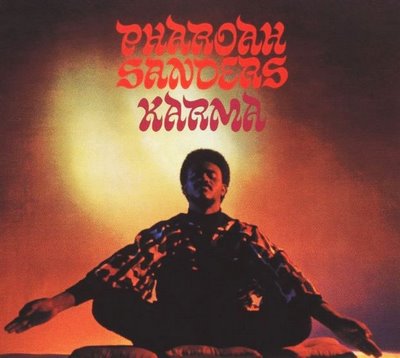
Many people will have some rejection of Pharaoh Sanders. The reasons are varied, and some of them are valid, but much of the criticism flowing against a die in terms of imagery that the music-and many more, had at the time. This exaggerated mysticism, orientalism that Wal Mart, full of energy halos, eagles and ENRAH's set on fire. Just see the album cover Karma (disk even though it contains one of the best early history) to see what I mean. However, beyond this notion of the mystical something packaged generates a bit of suspicion, the lightness of the discourse of African Americans doing a theosophical zapped Jesus leaping from Jah, Jah Buddha, Mohammed, Buddha, is not so much what he says, but in the conviction of what he says the real pen truths of every musician. And in the songs of Pharaoh Sanders, this spirituality, intense and hymn-form that communicates not only allows one to understand, but is poisoned by it-in a good sense of himself. I
coming to Black River and listen to those vocals repeating over and over again the same. "Love is everywhere, is everywhere Love, Love is in us all" Pharaoh does something strange that is that even in areas completely abrasive and difficult to digest aurally (noting that in Love in us all-disc containing Love is everywhere-is also To John , an entirely free and on the verge of collapse), always leads to another dimension where everything, even chaotic enough, pet a sense, a kind of wisdom and peace in which one bathing. Pain is not pain, is passion that leads to another state. This in many of his works, from "The operator has a master plan "to most of the themes of" Village of the Pharoahs. " I think the classic lennoniana talk, freedom, love and peace in the abstract and always seems somewhat rambling, even irresponsible asshole (ie "What peace?, What freedom?, What love?). However, Love is everywhere that does not seem so outlandish. Thinking that I am already at the door of the building.
Polly left me the keys. It is a rare keychain, as if a version between African and Ray Bradbury on a string (of course, not based on any religious figure, that is just a keychain). I open the door and I still hear the soprano sax by Sanders a relaxed just taking the bass line, gently gliding over the beautiful piano arrangements of Joe Bonner.
Polly knocked on the door and I opened. This with the glasses on and his clothes-of-have-been-all-the-day-school. Polly smiles and says something, but the music the cover. I do not want to remove the headphones yet, but I see it and for the first time that day, I smile. I think in other circumstances those voices repeating Love is everywhere I would be ridiculous. However, it might not bother me because I believe him to Pharaoh. Or perhaps, unknowingly, I'm starting to believe just that.
Polly left me the keys. It is a rare keychain, as if a version between African and Ray Bradbury on a string (of course, not based on any religious figure, that is just a keychain). I open the door and I still hear the soprano sax by Sanders a relaxed just taking the bass line, gently gliding over the beautiful piano arrangements of Joe Bonner.
Polly knocked on the door and I opened. This with the glasses on and his clothes-of-have-been-all-the-day-school. Polly smiles and says something, but the music the cover. I do not want to remove the headphones yet, but I see it and for the first time that day, I smile. I think in other circumstances those voices repeating Love is everywhere I would be ridiculous. However, it might not bother me because I believe him to Pharaoh. Or perhaps, unknowingly, I'm starting to believe just that.
Discography: